Food assistance programs for children and families: what you should know

Food assistance programs for children and families provide essential nutrition, improve health outcomes, reduce childhood obesity, and empower families to seek better opportunities for their children.
Food assistance programs for children and families play a crucial role in ensuring that kids don’t go hungry. Have you ever wondered how these programs really work or who they help? This article sheds light on their significance and the support they offer.
Understanding food assistance programs
Understanding food assistance programs is essential for families in need. These programs provide necessary support to ensure that children have access to healthy meals. Let’s dive into how they work and whom they benefit.
What are Food Assistance Programs?
Food assistance programs are designed to help individuals and families obtain nutritious food. They aim to reduce hunger and improve the well-being of children and families across the country.
Key Features of Food Assistance Programs
- They offer financial aid to purchase food.
- Programs often include access to free meals at schools.
- Eligibility usually depends on income levels and family size.
By understanding these features, families can better navigate the resources available to them. Many programs are structured to cater to various needs, including support for low-income households and special assistance for students. Sometimes, local organizations collaborate with schools to provide meals during holidays or summer breaks.
For example, the Supplemental Nutrition Assistance Program (SNAP) helps families stretch their food budgets. Additionally, programs like the School Breakfast Program ensure that children start their day with a nutritious meal. This not only supports better health but also enhances their ability to learn.
How to Access Food Assistance?
Accessing food assistance programs involves a few steps. Initially, families can check their eligibility online. Many states provide user-friendly websites where families can apply. Once approved, participants receive benefits that can be used at approved stores.
- Visit your local food assistance office.
- Complete the required application forms.
- Provide necessary documentation to prove eligibility.
Overall, understanding how to utilize these programs can significantly impact families’ quality of life. With the right assistance, families can find stability in their food security.
Eligibility criteria for families and children

Eligibility criteria for food assistance programs are vital for families seeking support. Understanding these requirements can help families determine if they qualify for assistance and how to access it.
Who Can Apply?
Generally, these programs are designed for low-income families and children. However, eligibility can depend on several factors, including household income, the number of people in the family, and specific needs.
Key Criteria for Eligibility
- Income limits determined by the federal guidelines.
- Residency in the state where assistance is sought.
- The age and number of children in the household.
Most programs require applicants to provide proof of income, such as pay stubs or tax returns. Families should also verify their household size, as this can significantly impact their eligibility. For example, larger families may qualify for higher benefits than smaller ones.
Additionally, some programs have specific requirements for children, such as age or school enrollment status. These criteria ensure that assistance reaches those who need it most. Understanding the qualifications is essential for families applying for programs like the Supplemental Nutrition Assistance Program (SNAP) and the Women, Infants, and Children (WIC) program.
Applying for Assistance
To get started, families can visit local government websites or community centers. They can find guides that detail application procedures and eligibility requirements. It’s important to gather all necessary documentation and fill out applications accurately to prevent delays.
- Check the specific program’s eligibility criteria.
- Prepare the necessary documents.
- Submit the application before any deadlines.
Once approved, families can receive benefits that help alleviate food insecurity and enhance their quality of life.
Types of food assistance available
Many types of food assistance programs are available to support families and children. Understanding these programs can help families choose the best options for their needs.
Government Programs
Government programs play a significant role in providing food assistance. Some of the most well-known programs include:
- Supplemental Nutrition Assistance Program (SNAP): Also known as food stamps, SNAP offers monthly benefits to help families buy healthy food.
- Women, Infants, and Children (WIC): WIC provides specific assistance to pregnant women, new mothers, and young children to improve nutrition.
- National School Lunch Program (NSLP): This program offers free or reduced-cost lunches to children in schools.
These programs ensure that families can access food, and they are often tailored to meet the unique needs of different groups, such as young children and mothers.
Community-Based Programs
In addition to government assistance, community-based programs provide vital resources. Food banks and pantries operate in many local areas, offering food to those in need without requiring proof of income. These programs often rely on donations from individuals, businesses, and organizations. Many also collaborate with local schools to distribute food during breaks.
Community programs can include:
- Mobile food pantries that deliver food directly to underserved areas.
- Community gardens where families can grow their own fruits and vegetables.
- Meal programs that serve hot meals in community centers.
Engaging with these local initiatives helps strengthen community ties while addressing food insecurity.
Ultimately, the variety of food assistance options gives families the support they need to feed their children safely. By taking advantage of available programs, families can work towards a healthier lifestyle.
The impact of food assistance on children’s health
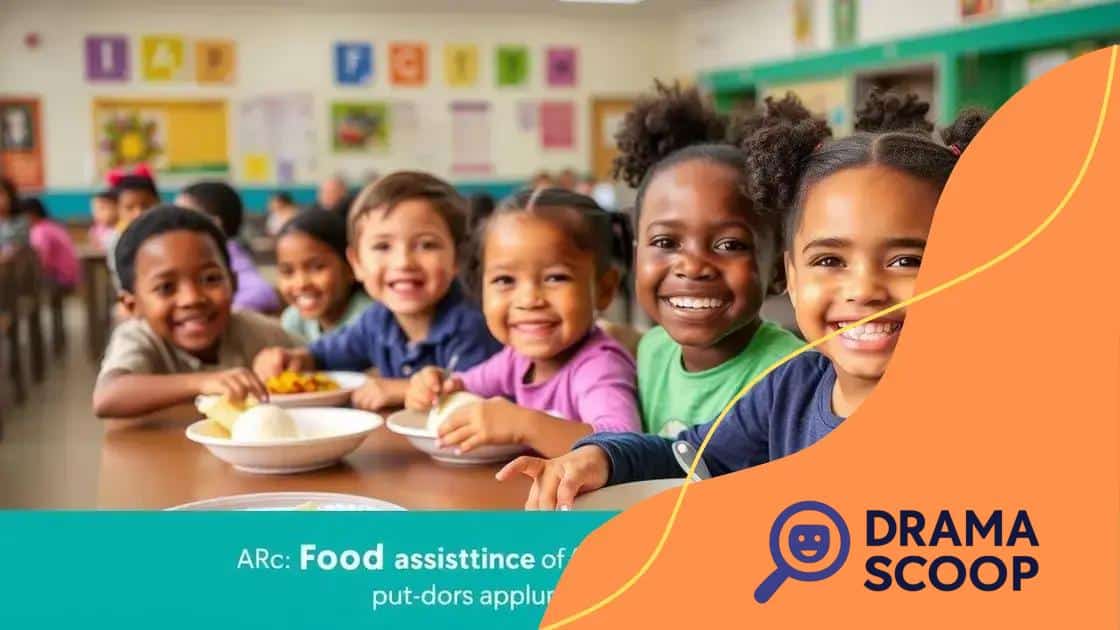
The impact of food assistance programs on children’s health is significant and far-reaching. Access to healthy food is vital for the growth and development of young bodies and minds. Families that benefit from these programs often notice improvements in their children’s health and well-being.
Nutritional Benefits
Food assistance programs ensure that children receive nutritious meals regularly. Programs like the National School Lunch Program provide balanced lunches that meet federal nutrition guidelines. This direct access helps combat childhood hunger, which can lead to better health outcomes.
Physical Health Improvements
Children who have access to adequate nutrition are less likely to experience serious health issues. Regular meals improve their immune systems, reduce the risk of obesity, and lower the chances of developing chronic diseases. Many studies show that food assistance leads to:
- Reduced rates of childhood obesity.
- Improved growth rates in young children.
- Higher energy levels and better focus in school.
With the right nutrition, children can perform better academically and socially, creating a positive cycle of success. Availability of healthy food contributes to overall health and helps prevent conditions like diabetes and heart disease later in life.
Emotional and Psychological Effects
The benefits of food assistance go beyond just physical health; they also impact children’s emotional and psychological well-being. When families do not have to worry about where their next meal will come from, children experience lower stress levels. This stability promotes better mental health, leading to:
- Increased happiness and confidence.
- Reduced anxiety and stress.
- Better relationships with peers and family members.
Beyond physical and emotional health, stable food sources allow families to focus on education and development. This stability can empower children, giving them more opportunities to thrive.
FAQ – Questions About Food Assistance Programs and Children’s Health
What are food assistance programs?
Food assistance programs provide essential nutrition to families in need, ensuring children have access to healthy meals.
How do these programs impact children’s health?
These programs help to reduce childhood obesity, improve growth rates, and promote better overall physical and mental health.
Who is eligible for food assistance programs?
Eligibility typically depends on household income, family size, and specific needs of children.
How can families apply for food assistance?
Families can apply online or in person at local food assistance offices, providing necessary documentation to prove eligibility.