Understanding the risks of investing in commodities: Is it worth it?
Understanding the risks of investing in commodities involves recognizing market trends, price volatility, and global events, while employing strategies like diversification and hedging to protect investments.
Understanding the risks of investing in commodities can be daunting. With fluctuating prices and global influences, many wonder how safe these investments truly are. Let’s dive into this complex market together.
What are commodities and how do they work?
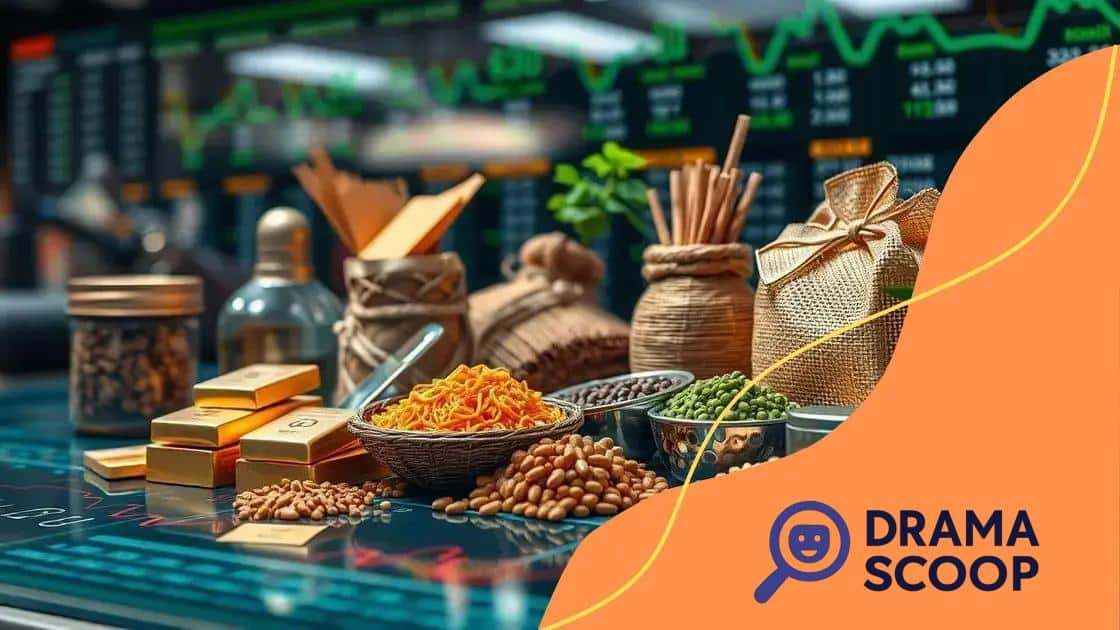
Commodities are essential goods that are traded in bulk. They can be found in everyday life, from the food we eat to the energy that powers our homes. Understanding what commodities are and how they function is crucial for investors.
Commodities are categorized into two main types: soft and hard. Soft commodities include agricultural products like corn, wheat, and coffee. Hard commodities are natural resources such as oil, gold, and metals. Each type serves different purposes and carries unique characteristics.
The role of commodities in the market
Commodities play a vital role in the global economy. They are a basis for trade, helping to set prices for various products. Traders and investors can buy and sell commodities to hedge against risks or speculate for profits. Changes in supply and demand largely determine their prices.
Key factors influencing commodity prices
- Supply and demand: If demand outstrips supply, prices usually rise.
- Global events: Natural disasters, geopolitical issues, or economic news can affect prices.
- Currency values: Commodities are often traded in U.S. dollars, so currency fluctuations can impact the prices.
Investors looking to enter commodity markets must understand these factors. Pricing can be volatile, often influenced by unpredictable surprises. For instance, poor weather can reduce crop yields, leading to an increase in prices for agricultural commodities.
Moreover, many commodities are traded on exchanges. These markets allow buyers and sellers to transact based on current prices. Knowing where and how these trades occur can help investors make more informed decisions. It is essential to stay updated on market trends and news influences as they can provide insights into future price movements.
Conclusion
In summary, commodities are fundamental to the trading world. By understanding the different types, market roles, and influencing factors, investors can navigate this complex landscape more effectively. Being well-informed is the key to making successful commodity investments.
Key risks associated with commodity investments

Investing in commodities can be rewarding, but it also involves certain risks. Recognizing these risks is essential for making informed decisions. Commodities are known for their price volatility, which can be influenced by various factors.
One major risk is price volatility. Prices of commodities, such as oil and gold, can fluctuate widely within short periods. This can result from changes in supply and demand, geopolitical tensions, or even economic reports. Understanding how these elements interplay is critical for any investor.
Market Risks
Another significant risk comes from the market itself. Investors must be aware that market sentiment can greatly influence prices. If the market reacts negatively to news, even stable commodities might see drastic price drops. This risk emphasizes the importance of keeping up with market trends.
Geopolitical Risks
- Global events: Natural disasters or political instability in producing countries can affect supply.
- Trade policies: Changes in trade agreements may create uncertainty, impacting pricing.
- Currency fluctuations: Since commodities are often priced in U.S. dollars, shifts in currency value can alter investment returns.
Another factor to consider is liquidity risk. Not all commodities have the same level of trading activity. Less traded commodities may be difficult to sell quickly or may not reflect real market prices. Investors should carefully assess the liquidity of the commodities they are interested in.
In addition, storage costs can be a hidden risk. Physical commodities like oil or grains require storage, which incurs costs. These expenses can eat into profits, especially if prices do not rise as expected. Evaluating all costs associated with holding these commodities is important.
Lastly, it’s essential to consider regulatory risks. Different countries have various laws governing commodity trading. Changes in regulations can impact market operations significantly. Investors should stay informed about the regulations in the markets they participate in.
Strategies to mitigate risks in commodities
Mitigating risks in commodity investments is crucial for success. Investors must adopt strategies that help protect their capital while maximizing potential returns. By employing certain practices, you can navigate this volatile market more effectively.
One effective strategy is to diversify your portfolio. By investing in a variety of commodities, you can spread out risk. This means if one commodity underperforms, others may offset those losses. Consider including agricultural products, metals, and energy resources in your investments.
Use of Hedging
Hedging is another strategy investors often use. This involves taking an opposite position in a related asset to protect against price drops. For example, if you purchase oil futures, you might also buy oil put options. This way, if oil prices fall, the gains from the put options help offset your losses.
Investing in ETFs
- Exchange-Traded Funds (ETFs): These funds allow you to invest in a group of commodities without directly buying them.
- Managed accounts: Consider hiring a professional who can manage your commodity investments for you.
- Options trading: Using options can provide a way to limit losses while keeping upside potential.
Another vital tactic is to stay informed about global events. Factors like weather patterns, political changes, or economic developments often influence commodity prices. Keeping up with news can help you anticipate market movements. For instance, a drought might impact agricultural yields, causing prices to rise. By being proactive and informed, you can make better investment decisions.
Lastly, consider using stop-loss orders. This tool allows you to set a specific price at which your investment will automatically sell, limiting losses on declining investments. Implementing stop-loss strategies can provide security, particularly in fast-moving markets.
How market trends impact commodity prices
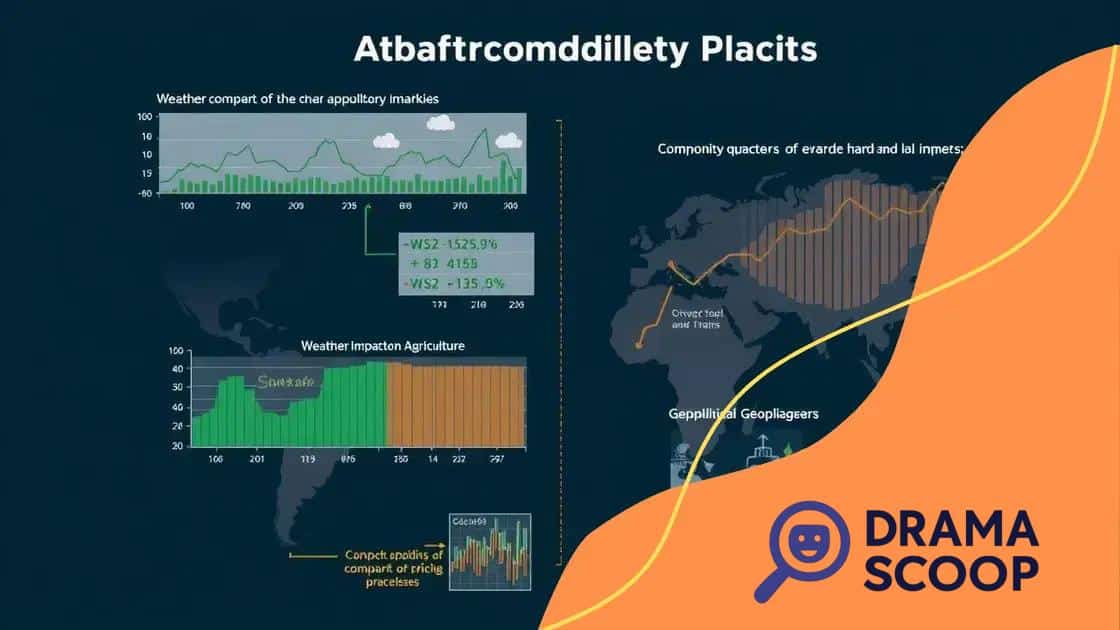
Market trends play a significant role in determining commodity prices. Investors must understand these trends to make informed decisions. Prices can rise or fall based on various factors that are often interconnected.
One key aspect to consider is supply and demand. When demand exceeds supply, prices typically increase. Conversely, if there is an oversupply of a commodity, prices tend to drop. For instance, a surge in demand for oil due to increased travel can push prices higher, while a surplus of grain can lead to falling prices.
Economic Indicators
Economic indicators also heavily influence commodity prices. Data such as employment rates, GDP growth, or inflation can affect investor confidence. When the economy is doing well, it often leads to higher demand for commodities.
Technological Advances
- Increased efficiency: New technologies in agriculture can boost crop yields, increasing supply.
- Alternative resources: Discovering new energy sources may decrease the reliance on traditional commodities.
- Transportation improvements: Better shipping means quicker delivery, affecting local supply and pricing.
Weather patterns are another crucial factor. For example, droughts can severely impact agricultural output, raising prices as supply dwindles. Similarly, natural disasters affecting oil production can cause spikes in fuel prices. Recognizing these patterns helps investors anticipate price movements.
Furthermore, geopolitical events can disrupt markets. Political instability in key commodity-producing regions can lead to supply shortages, driving prices up. For instance, conflicts in the Middle East have historically influenced oil prices due to fears of supply disruption.
Finally, trends in financial markets can also impact commodities. As investors move money in and out of various asset classes, commodities may see price fluctuations based on investor sentiment. A rise in stock markets may lead to increased investment in commodities, pushing prices higher.
In conclusion, understanding the risks of investing in commodities is essential for making smart financial decisions. By recognizing the market trends, supply and demand dynamics, and the various factors that affect prices, investors can navigate this complex landscape more effectively. Implementing strategies such as diversification and hedging can help mitigate potential losses. Staying informed about economic indicators and global events will provide valuable insights into market behavior. With the right knowledge and approach, investors can successfully engage in commodities and potentially reap significant rewards.
FAQ – Frequently Asked Questions about Investing in Commodities
What are commodities?
Commodities are basic goods traded in bulk, such as oil, gold, and agricultural products like wheat and corn.
How do market trends influence commodity prices?
Market trends impact prices through supply and demand, economic indicators, and geopolitical events, creating fluctuations in value.
What strategies can I use to reduce risks when investing in commodities?
You can diversify your portfolio, use hedging strategies, and stay informed about global market events to mitigate risks.
Why is it important to stay updated on global events when investing in commodities?
Global events can disrupt supply chains and impact prices, so being informed helps investors anticipate market changes and make better decisions.